Blue lotus: fact and fantasy
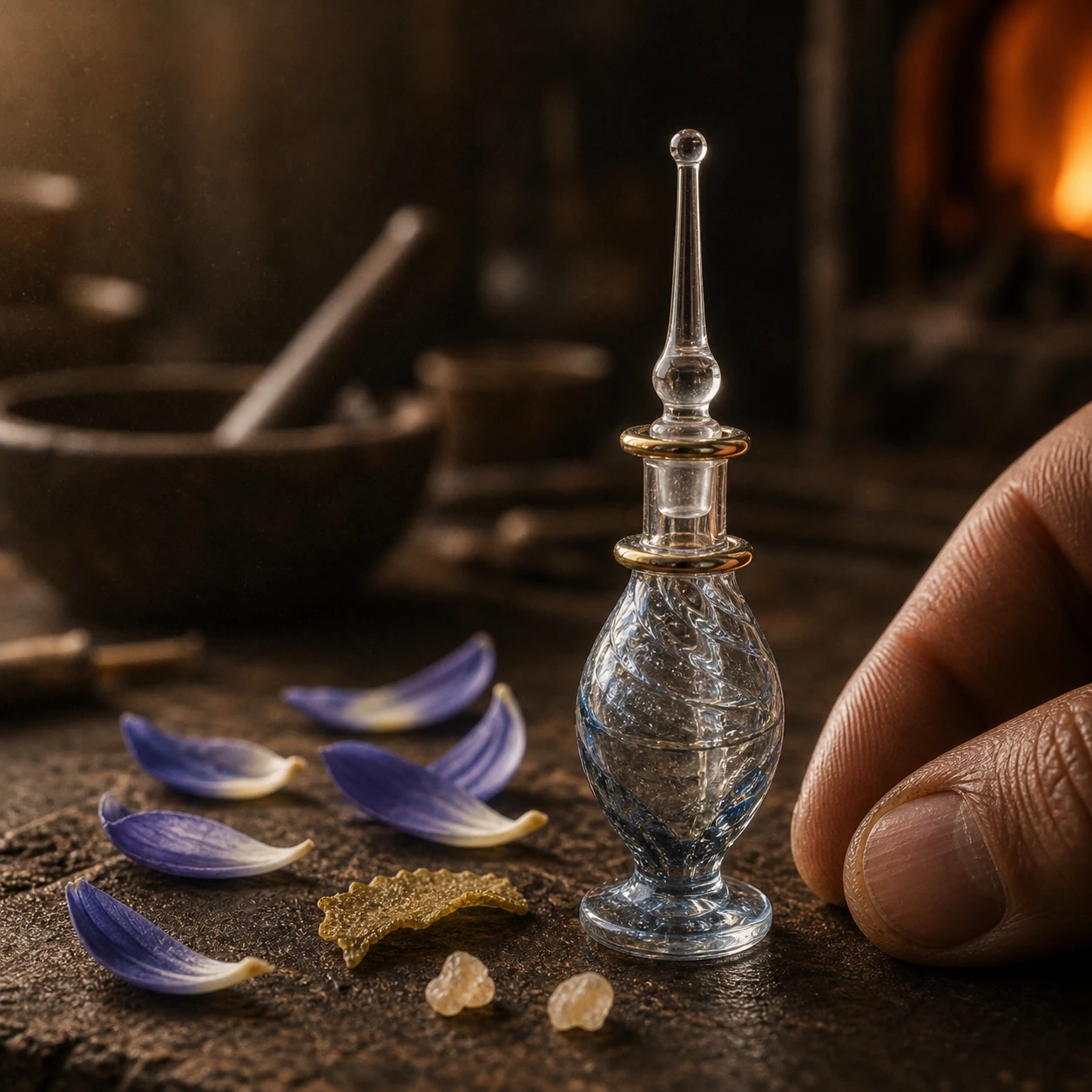
Blue lotus is one of the most overused phrases in Egyptian perfume. It is also one of the most interesting. The problem is not the flower. The problem is what people say about it.
In Egyptian art, lotus flowers appear again and again. Guests hold them at banquets. Headbands carry lotus buds. Tomb scenes place them near people, offerings and moments of rebirth. The plant opens and closes with the day, so it became tied to renewal, the sun and the return of life. It also has a real scent, which matters. This was not only a symbol drawn because it looked pretty.
The blue lotus most often discussed in Egypt is Nymphaea caerulea, a water lily rather than a true lotus in the strict botanical sense. That detail is worth knowing because modern product language often blurs the terms. In common Egyptian context, people still say blue lotus. Botanically, water lily is more precise.
What is solid
The flower was visible in Egyptian life and art. It was associated with rebirth and sensual pleasure. It appeared in banquet scenes, including tomb paintings where people hold or smell flowers. It was meaningful enough to become one of the visual languages of Egyptian joy, beauty and renewal.
It is also reasonable to connect lotus with fragrance. Ancient Egyptian scenes show flowers being handled, smelled and worn. Egyptian perfume making used flowers, plants, oils and fats. Some late scenes show flower processing. But that does not mean every “blue lotus perfume” sold today is a direct copy of an ancient recipe.
What is less certain
The internet often claims blue lotus was used as a hallucinogen in every Egyptian feast, or that one modern oil perfectly recreates a pharaoh’s private scent. That is too confident.
Some scholars have discussed narcotic or psychoactive possibilities for Nymphaea species. The Met notes that the Nymphaea lotus has narcotic properties and may have been used to achieve an altered state. That is a careful statement. “May have been” is not the same as “definitely was used this way by everyone.”
Good history keeps that line clear. The flower mattered. It smelled good. It had symbolic force. It may have had altered-state associations in some settings. But the exact use, dosage, preparation and social meaning are not always recoverable.
What blue lotus can mean in a modern oil
In perfume, blue lotus should not be treated as a magic word. A good lotus-inspired oil should feel cool, watery, floral, green, soft or slightly powdery. It should not need fake mystery piled on top of it. The real story is already strong enough.
The flower grew from water and returned with the sun. It sat in the hands of banquet guests. It belonged to images of beauty, scent and rebirth. That gives a perfumer enough to work with: freshness, warmth, skin, water, ceremony.
How to avoid the fake version
Be careful with claims that sound too exact. “This is the exact perfume worn by Cleopatra” is almost always a warning sign. “This is based on the documented importance of blue lotus in Egyptian art and scent culture” is more honest.
Also be careful with medical or drug claims. A perfume oil is not medicine. It is not a safe or controlled way to test ancient pharmacology. Wear it as scent. Respect the plant’s history without turning it into a cure-all.
The better version of blue lotus is quieter. It does not need to promise visions. It can simply carry the idea of Nile water at dawn, a flower opening in light, and a culture that treated scent as part of beauty, pleasure and return.