Frankincense in Egyptian temples
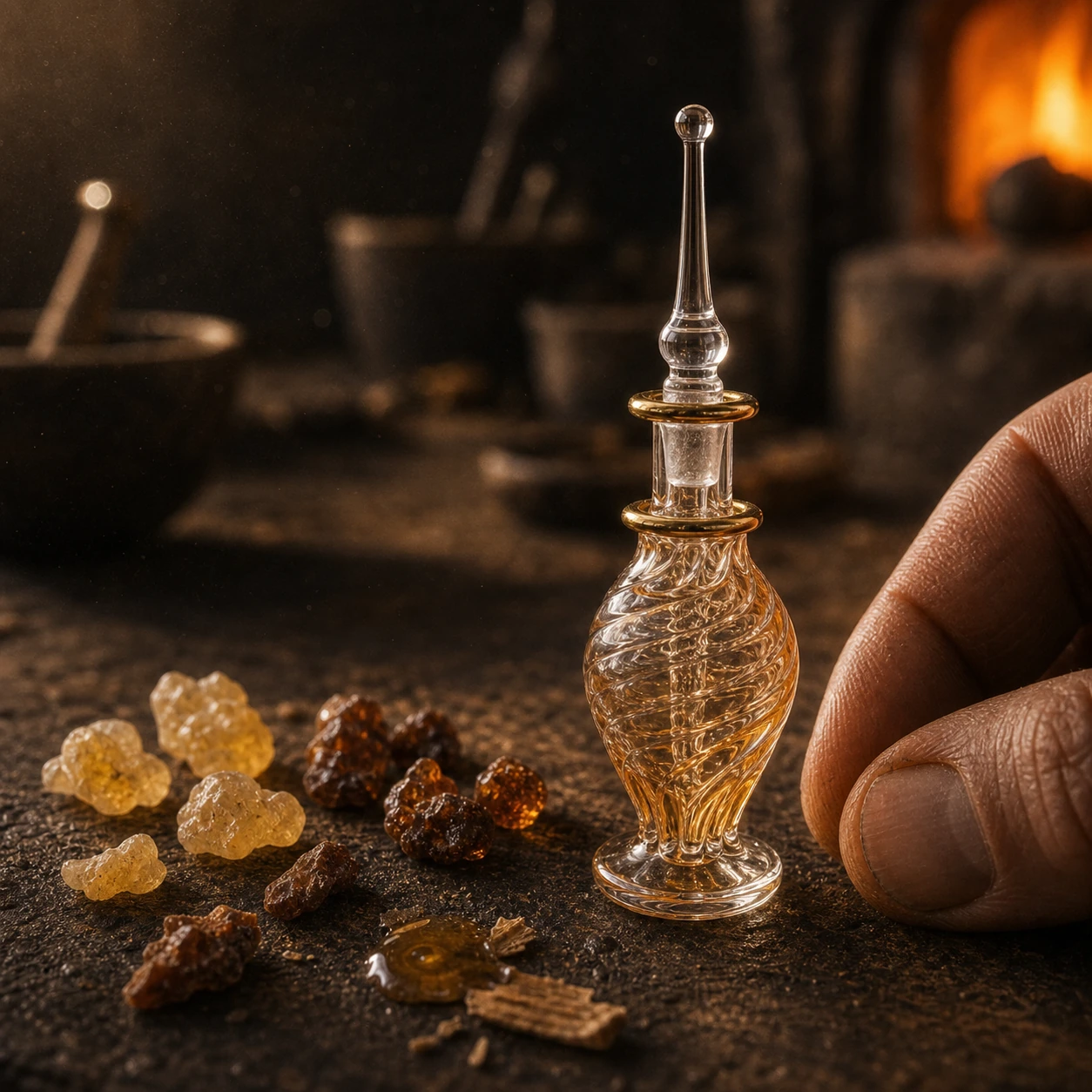
Frankincense is easy to reduce to a Christmas word or a luxury note. In ancient Egypt, it belongs first to smoke. It was a resin that could be burned, offered and used to change the air of a sacred place.
Temple scent was not background. It was part of ritual order. The air around the gods was meant to be clean, fragrant and set apart from ordinary life. Incense helped make that difference physical.
Resin that becomes air
Frankincense comes from Boswellia trees. When burned, the resin gives a bright, dry, slightly citrus and mineral smoke. It rises quickly and fills space in a way oil does not.
That made it useful in temples. A perfume oil stays on skin. Incense moves through a room. It touches walls, statues, priests, offerings and the senses of everyone present.
Offering and purity
Egyptian temples used repeated acts of care: washing, clothing, feeding, presenting and perfuming the divine image. Scent belonged to that system. Fragrant smoke could mark purity and presence. It could separate sacred work from ordinary air.
This does not mean every detail should be turned into a modern ritual script. We do not need to invent private ceremonies to respect the evidence. It is enough to understand that scent had a serious place in temple practice.
Trade and value
Frankincense was valuable because it was not simply local. Egypt looked outward for major aromatics, especially through networks tied to Punt and the Red Sea world. Imported resin carried the cost of distance, risk and skilled handling.
That is why incense appears in royal and temple contexts. It was useful, beautiful and politically meaningful. To bring aromatics into Egypt was to show reach and power.
Frankincense in perfume oil
In oil, frankincense changes. It loses the full lift of smoke and becomes smoother, resinous and slightly peppery or lemony. It can brighten myrrh, steady florals and make an amber base feel less sweet.
For an Egyptian-inspired oil, frankincense should feel like structure. It is not just a decorative ancient word. It is one of the materials that connects skin scent to temple air.
The real story is simple: frankincense made fragrance visible as smoke, and Egypt treated that smoke as something worth offering.