Kyphi: Egypt's temple scent, without the fantasy
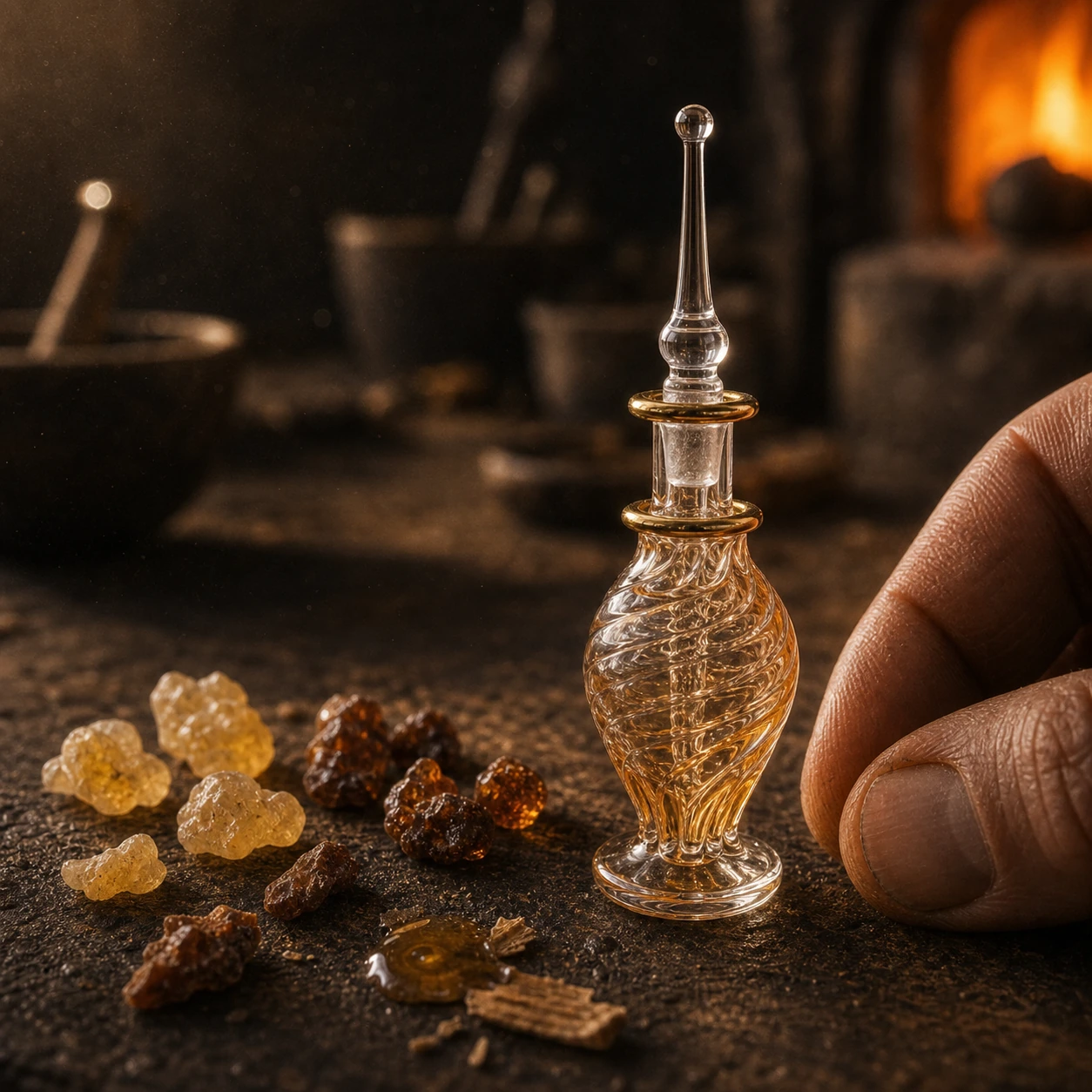
Kyphi is often described as an ancient Egyptian perfume. That is close, but not quite right. Kyphi was primarily an incense, a compounded aromatic made to be burned. It belongs to the temple world before it belongs to the wrist.
The Egyptian name is usually rendered as kapet or kapet-like forms, while “kyphi” comes through Greek. Ancient sources and temple inscriptions describe complex mixtures involving resins, spices, wine, honey, dried fruit and plant materials. The exact recipes vary by period and source, and some ingredient names are difficult to translate with certainty. That uncertainty matters.
Kyphi is not one simple recipe that can be copied from a single wall and sold as the one true Egyptian scent. It is a family of ritual aromatics with a documented place in temple practice.
What it was for
Incense changes a room. It marks time. It purifies. It makes air visible. In Egyptian temples, scent was part of the daily care of the gods. Incense offerings, oil offerings and anointing belonged to a system of service. A temple statue was not treated like an object in a display case. It was washed, dressed, fed and scented within ritual life.
Kyphi was one of the most famous scented compounds in that world. Later classical authors admired Egyptian perfume and incense, and kyphi became a name people repeated because it sounded like the ancient temple itself: dark, resinous, sweet, smoky and slow.
Why the recipe is complicated
The ingredients usually associated with kyphi include resins, honey, wine, raisins or other dried fruit, and aromatics such as myrrh, mastic, cinnamon-like spices, juniper or other fragrant plants depending on the source. Some records come from temple walls at places such as Edfu and Philae. Some come through Greek and Roman writers. Each source has its own problems.
Ancient plant names are not always easy to match with modern species. A Greek writer might substitute a plant familiar to his audience. A temple inscription might classify a resin by texture, age or quality rather than by modern botanical name. Even when the general category is clear, the exact material can remain uncertain.
That is why serious reconstructions use cautious language. They can recreate a plausible kyphi. They cannot prove that every household, temple or century used the exact same material in the exact same way.
What kyphi smells like
A kyphi-inspired scent should feel layered. Resin first, then sweetness, then smoke, then dried fruit or wine-dark warmth. It should not smell like a thin room spray. It should have weight.
Myrrh gives bitterness and depth. Frankincense gives lift when burned or brightness when used carefully in oil. Honey and dried fruit suggest sweetness, but not candy. Spices bring heat. Wine, in historical recipes, was part of extraction, binding and transformation, not a modern cocktail note.
Kyphi in perfume oil
Turning kyphi into a body oil is a modern interpretation. That is fine if it is described honestly. We are not burning temple incense on the skin. We are taking a historical direction and translating it into a wearable form.
The best translation keeps the character: resinous, warm, slightly smoky, slightly sweet, never cheap. It should feel like a low flame rather than a bright flower.
The honest way to talk about it
Say this: Kyphi is one of Egypt’s best documented ancient scent traditions. It was associated with temples and incense. Its recipes were complex and changed across sources.
Do not say this: This bottle is the exact kyphi burned for a named pharaoh on a named night unless there is evidence, and there almost never is.
The truth is better anyway. Kyphi shows that Egyptian scent was serious craft. It took time, imported materials, recipes, ritual knowledge and patience. That is enough.