Myrrh in Egyptian perfume
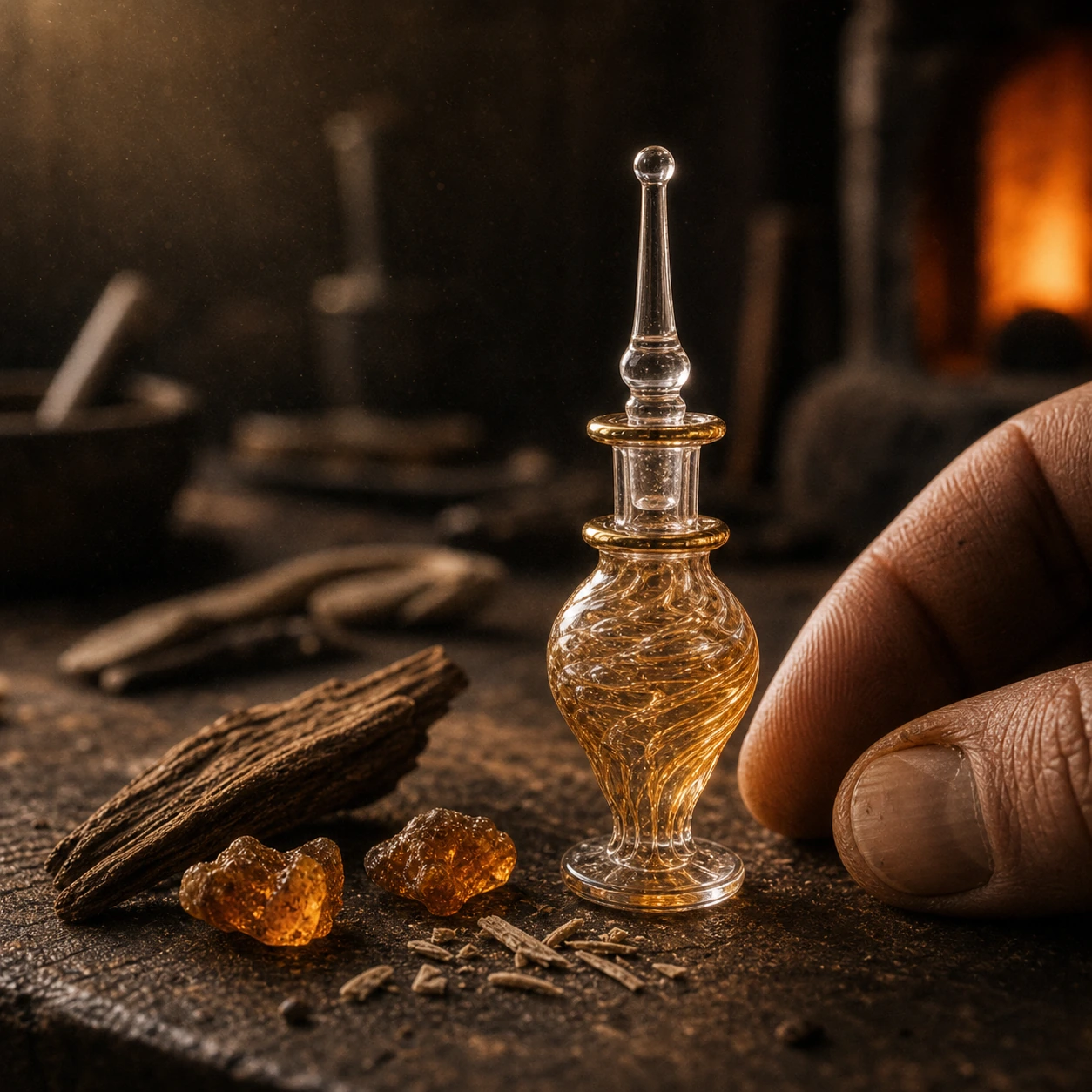
Myrrh is one of the few perfume words that still feels ancient because it really belongs to the old world. It is not a flower. It is not a soft top note. It is a resin, a hardened aromatic material from Commiphora trees, and Egypt valued it deeply.
Myrrh could be burned, mixed, offered, traded and worked into scented preparations. It belonged to temples, tombs, medicine and luxury. That range is exactly why it matters for Egyptian perfume.
What myrrh smells like
Myrrh is warm, bitter, dry and slightly medicinal. It can feel dark, balsamic and dusty. In oil it gives depth. In incense it gives smoke and gravity. It does not behave like a bright floral note that disappears quickly.
That staying power is the point. Egyptian scent prized materials that could last through heat, cling to skin and mark sacred space.
Why Egypt wanted it
Egypt did not have every prized aromatic within easy reach. Myrrh came through trade networks tied to Punt, the Red Sea world and regions beyond the Nile Valley. Its distance added value. Its ritual use added even more.
Temple offerings needed aromatic smoke. Burial practice used scented materials as part of care for the dead. Elite life used perfume and unguents to mark status, cleanliness and beauty. Myrrh could speak to all of those worlds.
Myrrh and oil
Myrrh makes sense in oil perfume because it is slow. It does not need to leap into the air. It can sit under florals, amber, musk, oud or spice and keep the scent warm for hours.
A myrrh-heavy oil should not feel sugary. It should have a grounded bitterness. That edge is what makes it feel real. Without it, the note becomes a vague amber idea.
What not to claim
No one should sell a modern myrrh oil by saying it is the exact recipe worn by a named pharaoh. Myrrh was important, but importance is not the same as a recovered personal formula.
The honest claim is stronger: myrrh was one of the true materials of Egyptian scent culture. It moved through trade, temples and burial practice. It still gives perfume oil the same kind of slow, resinous depth that made it valuable in the first place.