Perfume and burial in ancient Egypt
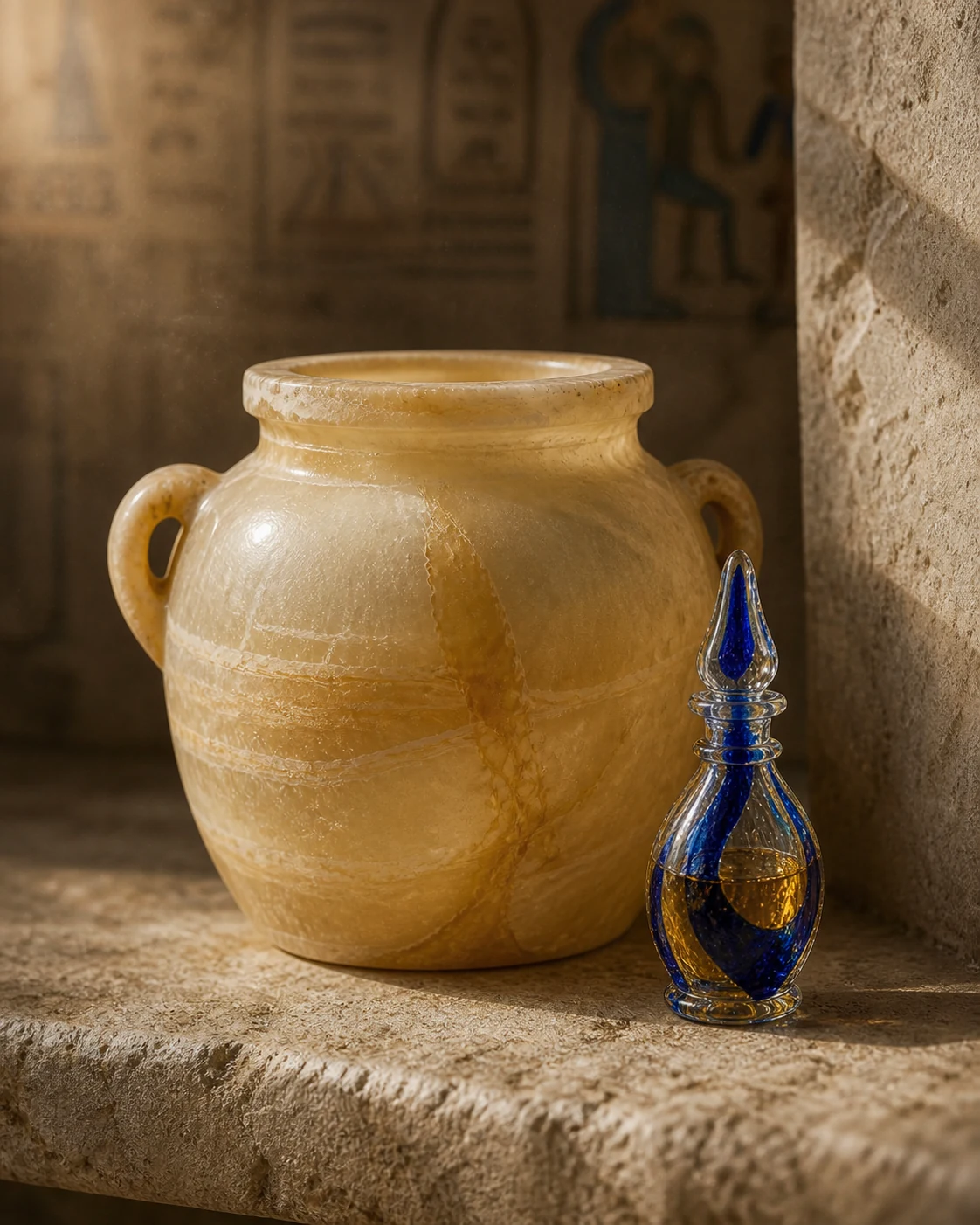
Perfume in ancient Egypt did not end with daily life. Scented materials also belonged to burial, where oils, resins, unguents and vessels became part of care for the dead.
That can sound strange from a modern point of view. We think of perfume as personal style. Egypt saw scent more broadly. It could care for the body, honor the person, serve ritual needs and help prepare someone for the afterlife.
The body and preservation
Egyptian burial practice used resins, oils and other materials in complex ways. Some were practical. Some were ritual. Some were both. Aromatic substances could help mask decay, treat wrappings, mark purity and connect the body to divine care.
It is important not to simplify this into “perfume was used because it smelled nice.” Smell mattered, but burial scent carried more weight than decoration.
Tomb vessels
Tombs often included containers for oils, cosmetics and scented materials. A fine jar could hold value in two ways: the material inside was precious, and the vessel itself showed status and care.
The tomb of Tutankhamun is the famous example most people know. It included cosmetic and perfume vessels, and analysis of some contents has shown resinous fatty material. That points to real aromatic preparations, even when the exact full recipe is gone.
Status and devotion
Rare scent was expensive. Imported resins, skilled preparation and fine containers all cost effort. To place such materials in a tomb was to say that the person deserved care beyond ordinary use.
This was not only about wealth. It was also about order. A prepared body, a supplied tomb and proper offerings reflected a culture that took the afterlife seriously.
What not to invent
We should not claim that every tomb jar held a wearable perfume in the modern sense. Some materials were balms, preservatives, ritual substances or cosmetics. Some may have changed over time. Some contents are difficult to identify after thousands of years.
The honest wording is better: scent materials were part of Egyptian funerary care, and perfume vessels show how valuable aromatic substances were.
Why it still matters
Burial use tells us that Egyptian scent was not casual. It belonged to body, memory, ritual and permanence.
Modern perfume oil is a living product, not a funerary one. But the old respect for material still matters. Oil, resin and vessel were treated as things with weight. That is the part worth keeping.