Perfume and the gods of Egypt
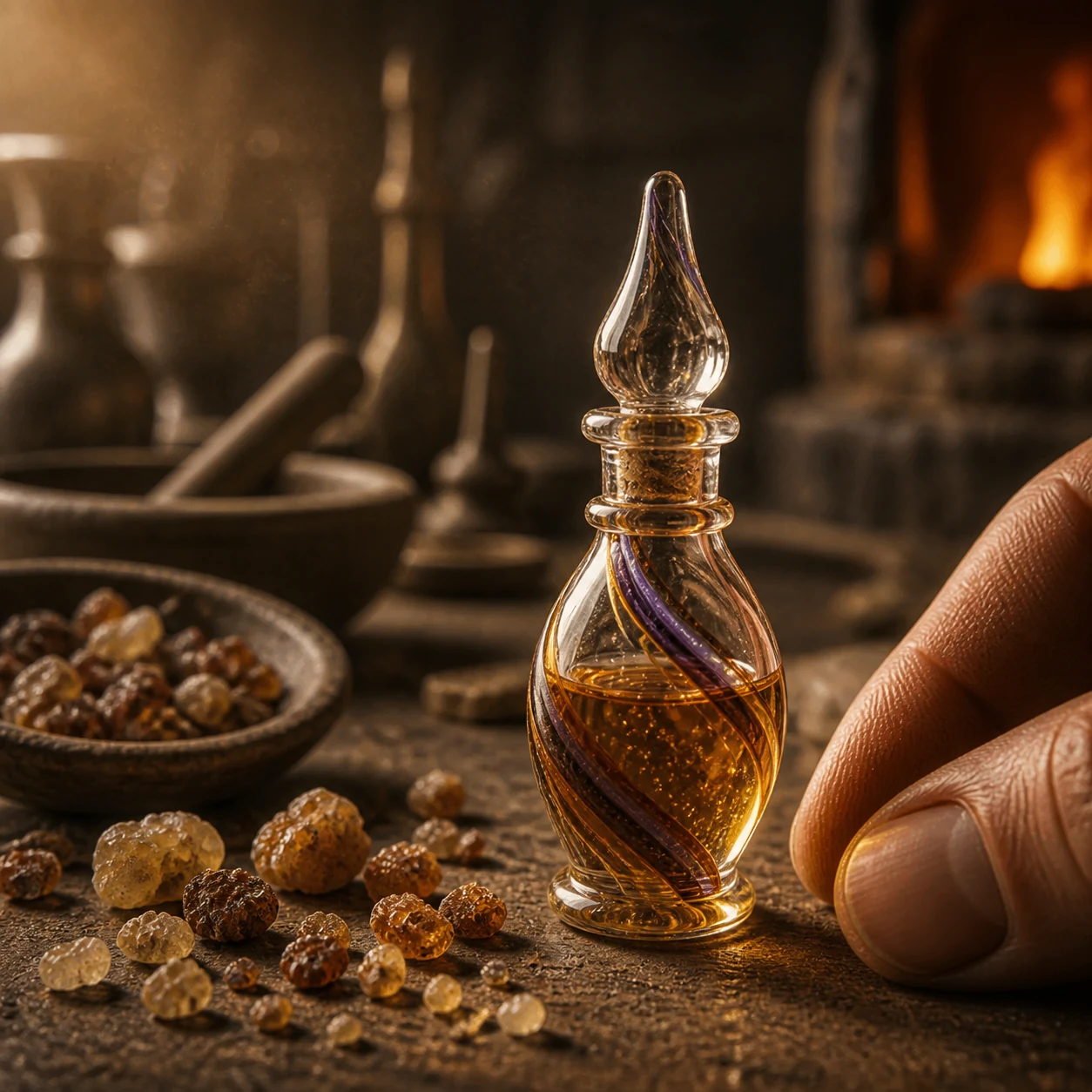
In ancient Egypt, scent was one of the ways a temple made the divine world feel present. Incense, oil, flowers and aromatic offerings were not decoration. They were part of care.
The gods were served through repeated acts: washing, clothing, feeding, presenting and perfuming. Scent helped mark the space as clean, ordered and worthy.
Fragrance as offering
An offering does not need to be eaten to matter. Smoke rises. Oil gleams. Flowers fade. These things transform in front of the senses. That makes them powerful in ritual space.
Frankincense, myrrh and compound incense could change the temple air. The smell would cling to stone, cloth, skin and memory. It made sacred work physical.
Purity and order
Egyptian religion cared about order. Cleanliness, correct action and proper presentation mattered. Fragrance belonged to that system because bad smell was not neutral. Pleasant, controlled scent helped express purity.
This is why temple scent should not be treated like modern room fragrance. It had a job beyond atmosphere.
Kyphi and the temple world
Kyphi is the best-known Egyptian aromatic compound because ancient sources preserve versions of its ingredients and preparation. It was associated with temple use and evening incense. Honey, wine, raisins, resins, spices and other materials appear in different accounts.
The details vary, which is exactly why careful wording matters. Kyphi was a real tradition, not one simple recipe that can be copied perfectly from a wall and sold without context.
Flowers and divine beauty
Flowers also mattered. Lotus and other plants appear in offering scenes, banquet imagery and symbols of renewal. Their scent and shape connected beauty, rebirth and pleasure.
But here too, restraint is needed. A flower in art does not prove every modern perfume claim. It shows that floral scent and symbolism belonged to the Egyptian imagination.
What this means now
Modern perfume oil is not temple service. It is personal scent. Still, Egyptian temple practice teaches an important lesson: fragrance was serious. It could mark a threshold between ordinary life and something more careful.
That does not require fake rituals or invented scripts. A small amount of oil, worn with attention, is enough to carry the older idea in a modern way.