Perfume at home in ancient Egypt
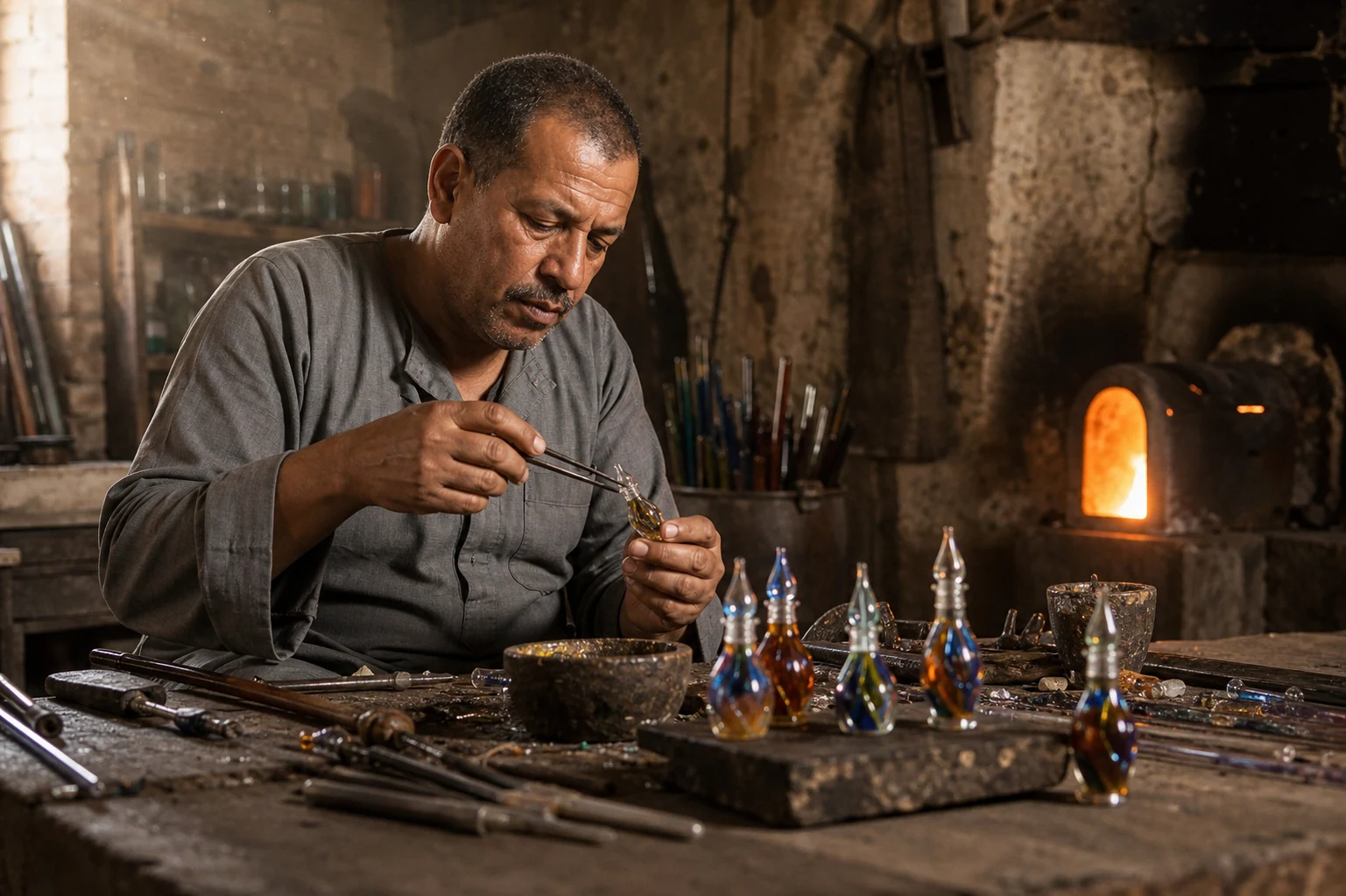
It is easy to talk about Egyptian perfume as if it belonged only to pharaohs, temples and tombs. Those places give us the best evidence because they preserved objects and images. But scent also belonged to daily life.
Ancient Egyptian grooming was practical and social. People lived with heat, dust, insects and bright sun. Clean skin, shaved hair, linen clothing, eye paint, oils and scented preparations all belonged to the way a person presented themselves. Cosmetics were not only decoration. They were part of cleanliness, comfort, status and ritual order.
The body
Oil on the skin makes sense in a dry climate. It softens. It gives a sheen. It can carry fragrance. It can also make the body feel cared for after washing. A scented oil or unguent would not behave like a modern spray. It would be touched onto the skin or hair and worn close.
Both men and women used cosmetics in ancient Egypt. Tomb scenes and objects show grooming as part of an ideal life. Kohl containers, mirrors, combs, razors, oil jars and cosmetic spoons all point to a culture where personal care mattered.
This does not mean every person had the same materials. A farmer and a court official did not share the same access to imported myrrh, fine stone vessels and prepared luxury oils. But the habit of caring for the body was widespread.
Hair and wigs
Hair care was a major part of Egyptian grooming. Some people shaved their heads or kept hair short. Wigs were worn in some settings, especially among elites. Scented oils and fats could be used on hair or wigs, though the details varied by period and status.
The famous image of perfumed cones on heads belongs mostly to art and ritual scenes, especially banquets. Archaeological finds from Amarna have shown that head cones were real objects, though scholars still discuss their exact meaning and use. They may have been made from waxy materials and connected to rebirth, fertility or elite identity rather than simply being practical melting perfume hats in every scene.
The careful answer is this: scent and hair were connected, but not every picture should be read as a literal everyday habit.
Linen and rooms
Scent also lived beyond skin. Linen could hold smell. Rooms could be perfumed by burning incense. Oil could be used in domestic or ritual settings. A household with means could keep small containers for grooming and scent. A temple had far more formal procedures.
This range matters. Scent moved between ordinary comfort and sacred action. The same culture that used oil to care for the body also used incense to honor the gods.
Hospitality and social life
Banquet scenes show guests with flowers, cones, fruit, music and drink. These images are not snapshots like modern photographs. They are idealized, symbolic and connected to tomb beliefs. Still, they show what Egyptians associated with pleasure and fullness: scent, music, food, touch, beauty and renewal.
To smell good was not a shallow thing. It signaled order and care. Bad smell could suggest disorder, decay or neglect. Good smell belonged to life.
A modern lesson
The daily-life lesson is simple. Perfume oil is not only for grand occasions. It can be part of a small routine: after washing, on warm skin, one dab at the wrist or throat, enough to keep close.
That is truer to the old form than drowning yourself in fragrance. Egyptian-style oil should feel deliberate. It belongs to the body, not the air-conditioning.
Ancient Egypt gives us temples and kings because stone preserves power. But the deeper story is more human. People washed, dressed, oiled, painted, combed, scented and stepped into the day.