The real materials of ancient Egyptian perfume
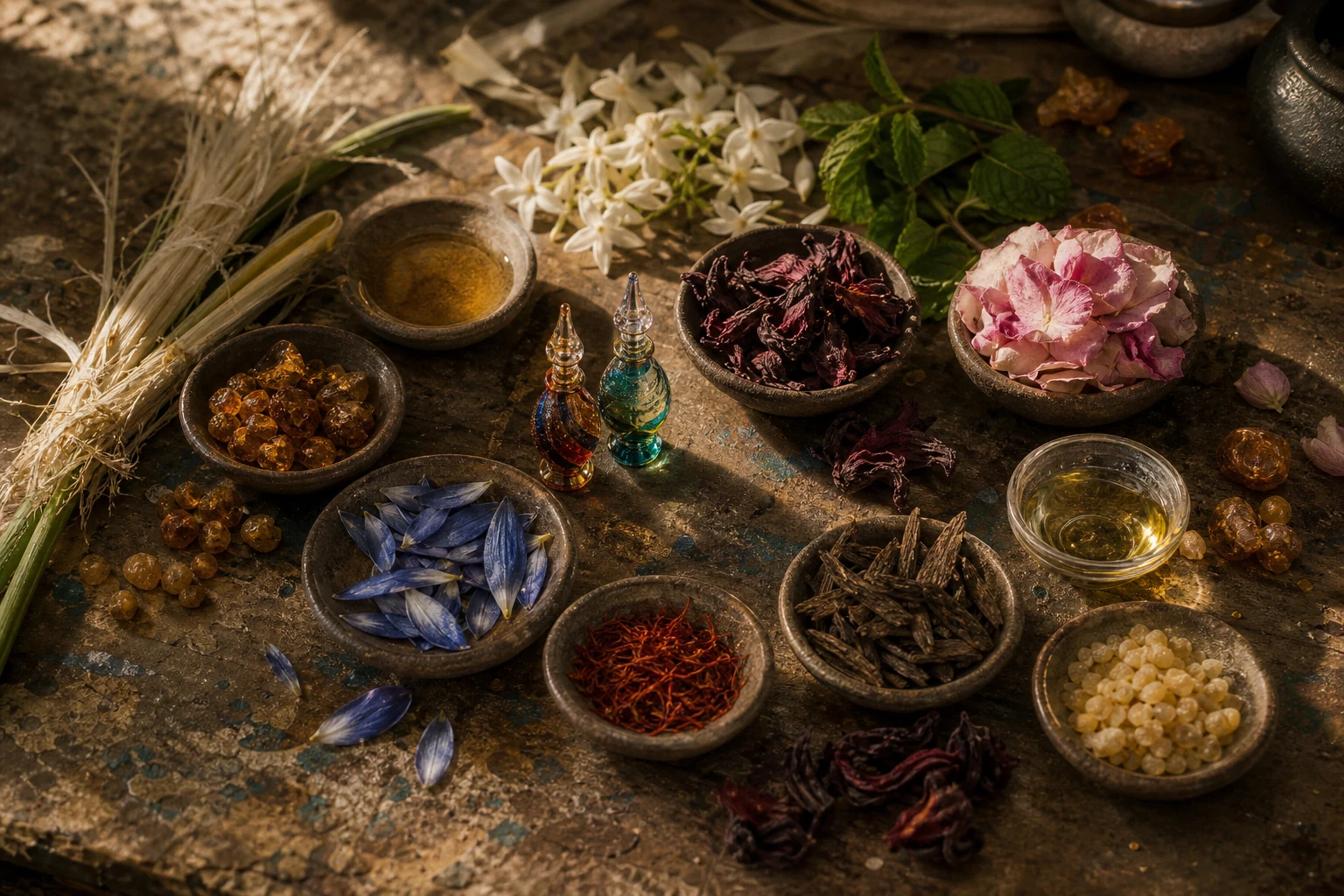
Ancient Egyptian perfume sounds mysterious because modern marketing often makes it vague. The real materials are more useful than the myth. Egypt worked with oils, fats, resins, flowers, woods, spices and incense. Some were local. Some had to move through long trade routes before they reached a temple, workshop or wealthy home.
The old scent world was not one formula. It was a set of materials and methods. Some scents were worn on the body. Some were rubbed into hair or skin. Some were burned before the gods. Some belonged with burial and preservation. What connects them is the base: slow materials held in oil, fat, resin or smoke.
Oils and fats
Modern perfume usually begins with alcohol. Ancient Egyptian scent did not. Body fragrance was usually carried in oil or fat. Texts and studies point to materials such as balanos oil, moringa oil, sesame oil, castor oil, almond oil and animal fats. A liquid oil could be touched onto skin. A thicker fat could become an unguent, closer to a balm.
This changes how the scent behaves. Oil keeps fragrance close. Fat makes it soft, warm and physical. Neither works like a spray.
Resins
Frankincense and myrrh were central because they last. They can be burned, ground, mixed and held in oil. Myrrh is bitter, warm and dark. Frankincense is cleaner, brighter and more mineral when burned, but still resinous in oil.
These were not casual materials. Egypt imported major aromatics from regions tied to Punt, the Red Sea world and wider trade. Their value came from distance, ritual use and staying power.
Flowers and plants
Egypt also loved the scent and symbol of flowers. Blue lotus, water lily, lily, rose and other plant materials appear in the wider Egyptian world of beauty, banquets and offering. Some flowers are easier to show in art than to prove in a recipe. That is why careful wording matters.
It is fair to say floral materials mattered. It is not fair to claim that every modern lotus oil is a perfect copy of a pharaoh’s bottle.
Spices, woods and smoke
Cassia, cinnamon-like aromatics, cardamom, juniper, calamus and other warm materials appear in ancient scent discussions. Woods and smoke also mattered. A temple smelled different from a wrist because burning changes everything. Smoke lifts resin into the air. Oil keeps it close to skin.
The honest picture
Ancient Egyptian perfume was not weak or primitive. It was patient. It used materials that could survive heat, cling to the body, mark ritual space and signal wealth.
That is the real pattern: oil, fat, resin, flower, spice and smoke. No miracle story is needed. The materials are strong enough.