What did Egyptian perfume bottles look like?
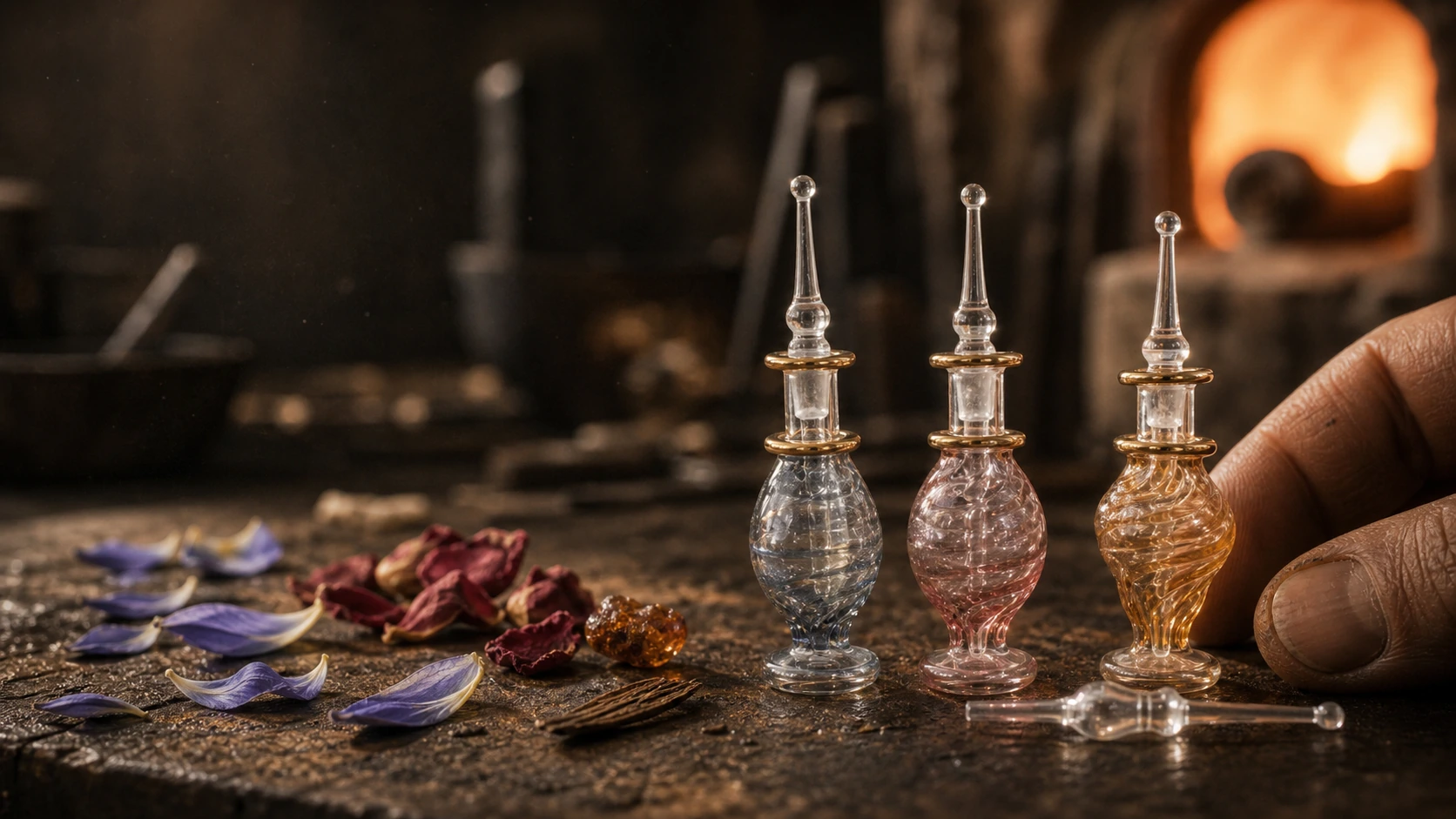
When people imagine ancient perfume, they often picture a glass bottle with a neat stopper and a label. Ancient Egypt was different. Perfume and cosmetic materials were kept in vessels made from stone, faience, clay, glass, wood and other materials depending on period, purpose and wealth.
The container mattered because the contents mattered. Scented oil, fat, resin and cosmetic paste were valuable. They needed to be protected, presented and sometimes buried with care.
Stone jars
Stone vessels are some of the most recognizable Egyptian scent containers. Travertine, often called Egyptian alabaster, could be carved into jars and small containers with a pale, luminous surface. Other stones were also used. Stone made sense for precious material because it felt permanent, cool and dignified.
Some vessels were practical. Some were luxury objects. Some were placed in tombs, where the container became part of the person’s equipment for the afterlife.
Cosmetic vessels
Egyptian scent overlaps with cosmetics. Oils, unguents, eye paint and grooming materials could sit near each other in daily life and in burial goods. Small jars, boxes and containers held the materials of presentation: skin, hair, eyes, linen and scent.
That is why it can be hard to draw a sharp modern line between perfume bottle, cosmetic jar and ointment vessel. Egypt did not need our shop categories.
Glass, faience and clay
Glass became important in later periods and could be shaped into beautiful small vessels. Faience offered color and shine. Clay was more ordinary but useful. The material tells us something about access, status and use, but it does not always tell us exactly what was inside.
A wealthy person could own fine containers. A simpler household could use simpler materials. The desire to hold scent well was not limited to one class, but rare aromatics and luxury vessels were not evenly available.
Stoppers, lids and storage
Oil and unguent need protection from air, dust, heat and handling. Ancient vessels used closures suited to their time and form. The goal was straightforward: keep the precious material usable and contained.
Modern oil perfume still follows the same logic. A good bottle should protect the oil, dose it carefully and feel worthy of what is inside.
The real lesson
Ancient Egyptian perfume bottles were not one shape. They were a family of containers for a scent culture built around oil, fat, resin and ritual value.
The best modern bottle does not need to imitate every ancient form. It should respect the old idea: scent is material, and the vessel should treat it that way.