What were unguents?
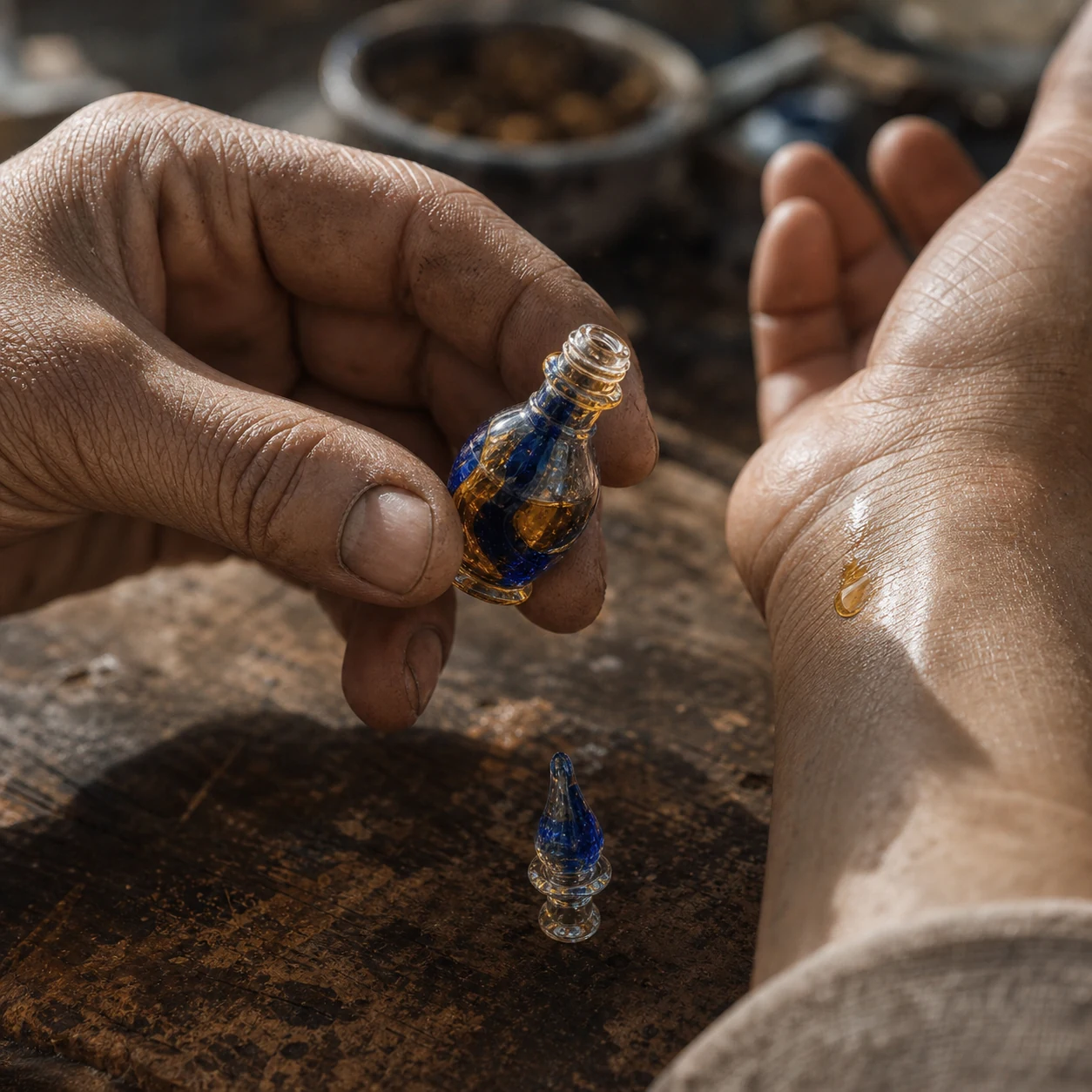
An unguent is one of the most useful words for understanding ancient Egyptian scent. It means a fatty or oily preparation used on the body. Some unguents were scented. Some were cosmetic. Some had ritual or funerary uses.
If modern perfume makes you think of a spray, unguent pulls you back to the older world: material touched by hand, warmed by skin and held in a jar.
Fat, oil and balm
Unguent could be soft, thick or oily depending on the base. Animal fats and plant oils could carry aromatic materials. Resins, flowers, spices or other scents could be worked into the preparation.
This was not a mist. It was a substance. It had texture. It could condition skin or hair while also carrying fragrance.
Why Egypt used them
Egypt’s climate made oil and fat practical. Heat, sun, wind and dust all affect skin and hair. Oiling the body was not only vanity. It was care, presentation and comfort.
Scent added another layer. A fragrant unguent could make the body socially acceptable, ritually clean or luxurious. In elite settings, rare aromatics raised the value even further.
Unguent and perfume are not opposites
Modern categories can confuse the issue. We separate skincare, balm, perfume, incense and ritual material into different shelves. Ancient Egypt did not always draw those lines the same way.
An unguent could be cosmetic and fragrant. It could be used in life or placed in a tomb. It could be practical and symbolic at once.
The cone problem
Egyptian art famously shows cone-shaped objects on the heads of banquet guests. People once described them as scented wax or fat cones that melted into wigs. The exact interpretation has been debated, and evidence should be handled carefully.
The safer point is that Egyptian art strongly connects scent, hair, feasting, flowers and social display. Whether every cone worked the way older books claimed is a separate question.
Modern perfume oil is the closest habit
A perfume oil is not exactly an ancient unguent, but it shares the slower logic. It is touched onto skin. It warms. It stays close. It does not need an alcohol cloud to work.
That is why learning the word unguent helps. It reminds us that ancient perfume was not just a smell. It was a material you wore.