Why Egyptian perfume was oil, not alcohol
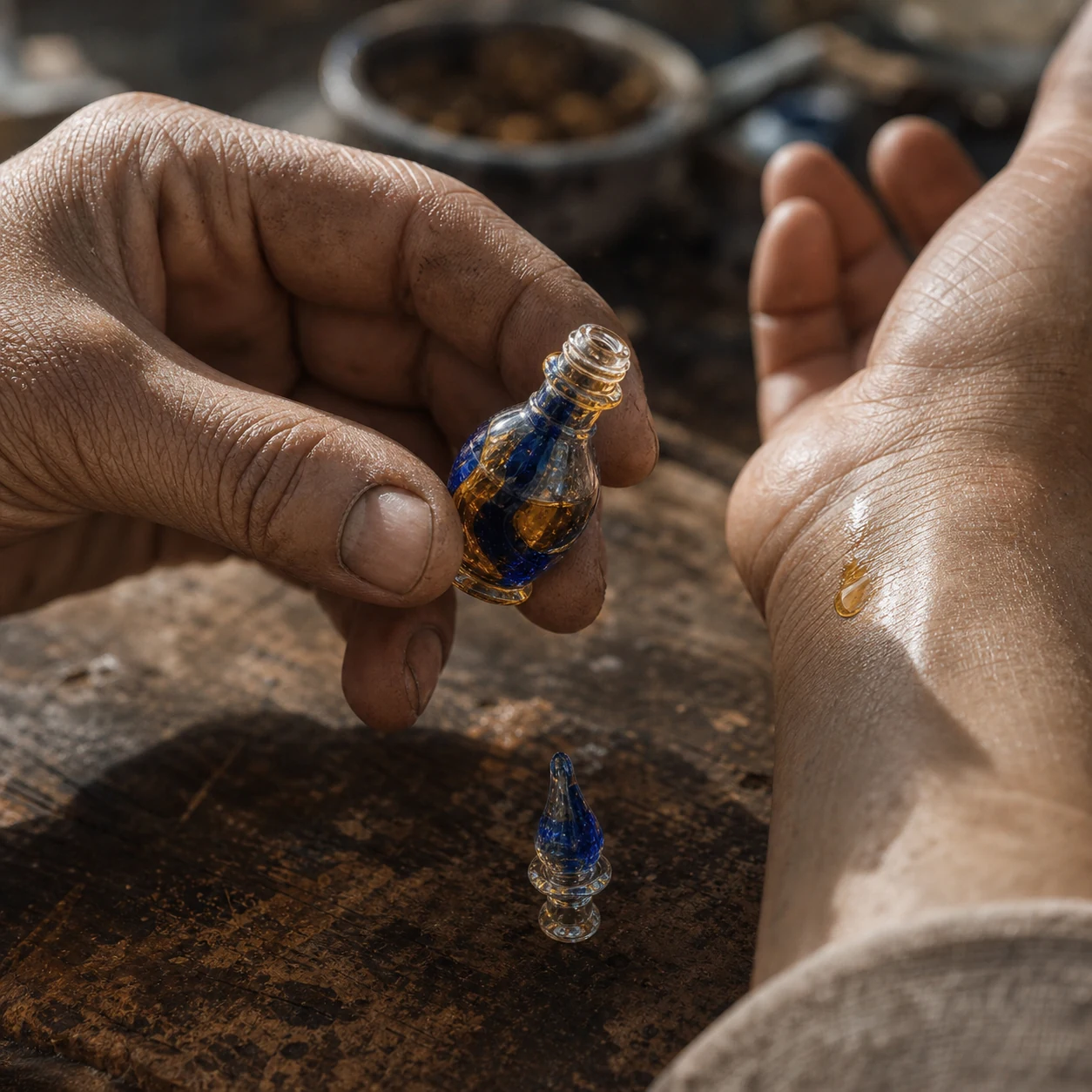
Modern perfume is usually an alcohol spray. Ancient Egyptian perfume was not. That one fact changes almost everything about how the scent behaved, how it was made, and how it was worn.
The Egyptian scent world was built on oil, fat, resin and incense. A liquid scent for the body was prepared into an oily base. A solid scent could be made as an unguent, closer to a scented balm than a modern perfume. A temple scent might be burned as incense, releasing fragrance through heat and smoke. The point was not to make a mist that vanished from the air. The point was to hold fragrance close to skin, cloth, hair, stone, ritual objects and the rooms of the gods.
That is why Egyptian perfume oil feels so different from a spray. Alcohol lifts scent quickly. It flashes off, throws the top notes outward, and then leaves the rest of the formula to settle. Oil moves more slowly. It sits on skin. It warms as the body warms. It does not announce itself in the same sharp way. It stays closer, and it changes over hours rather than minutes.
What the sources actually show
The best evidence does not point to spray bottles or distilled alcohol perfume in Pharaonic Egypt. It points to fat-based and oil-based preparations, as well as incense. Egyptologists list common scented ingredients such as frankincense, myrrh, cinnamon, cassia and cardamom. They also list possible base materials for body scent, including sesame oil, castor oil, balanos oil, moringa oil, limited olive or almond oil, and animal fats for more solid unguents.
That does not mean every Egyptian wore rare imported aromatics every day. Costly resins and spices were expensive. Some preparations belonged to temples, court life, elite households and funerary ritual. Simpler oils and fats would have been more practical for ordinary care. The important point is the structure: scent was carried by a substance that stayed on the body or burned slowly in a ritual space.
Why oil made sense in Egypt
Egypt is hot, dry and bright. Skin needs protection from sun, dust and wind. Oil and fat helped condition the skin and hair, while scent made the body socially and ritually acceptable. Cleanliness mattered. So did presentation. Perfume was not only decoration. It was part of a larger culture of bathing, shaving, grooming, linen, cosmetics and ritual purity.
Oil also suited the materials Egypt loved. Resin is heavy. Myrrh is bitter, warm and tenacious. Frankincense is bright when burned, but resinous when held in oil. Cinnamon, cassia and cardamom bring warmth. These materials are not shy. They do not need an alcohol cloud to make themselves known. They open well in heat and sit well in a base.
That is why Egyptian-style oil perfume should be judged differently from a spray. A good oil is not weak because it stays close. Closeness is part of the form. It is worn for the person near you, for the wrist, the neck, the cloth, the moment you move.
Why this matters now
A lot of modern marketing talks about ancient Egyptian perfume as if it were just a fantasy version of today’s fragrance counter. It was not. The older form was slower, denser and more physical. It was touched onto the body, not sprayed into a room.
This is also why pure perfume oil should be used lightly. One dab is enough to test it. Two or three dabs can last for hours. Rubbing hard can flatten the scent and spread it unevenly. Letting it sit gives the oil time to warm.
When people say Egyptian perfume oil feels more intimate than modern perfume, that is not just romance. It comes from the material reality of the thing. Oil stays where it is placed. It wears with the body. It does not need to fill a lift or announce itself across a table.
The ancient Egyptians knew scent as something carried in fat, oil, resin and smoke. That is the old logic. Wear it close. Let it warm. Do not rush it.