What perfume did the pharaohs actually wear?
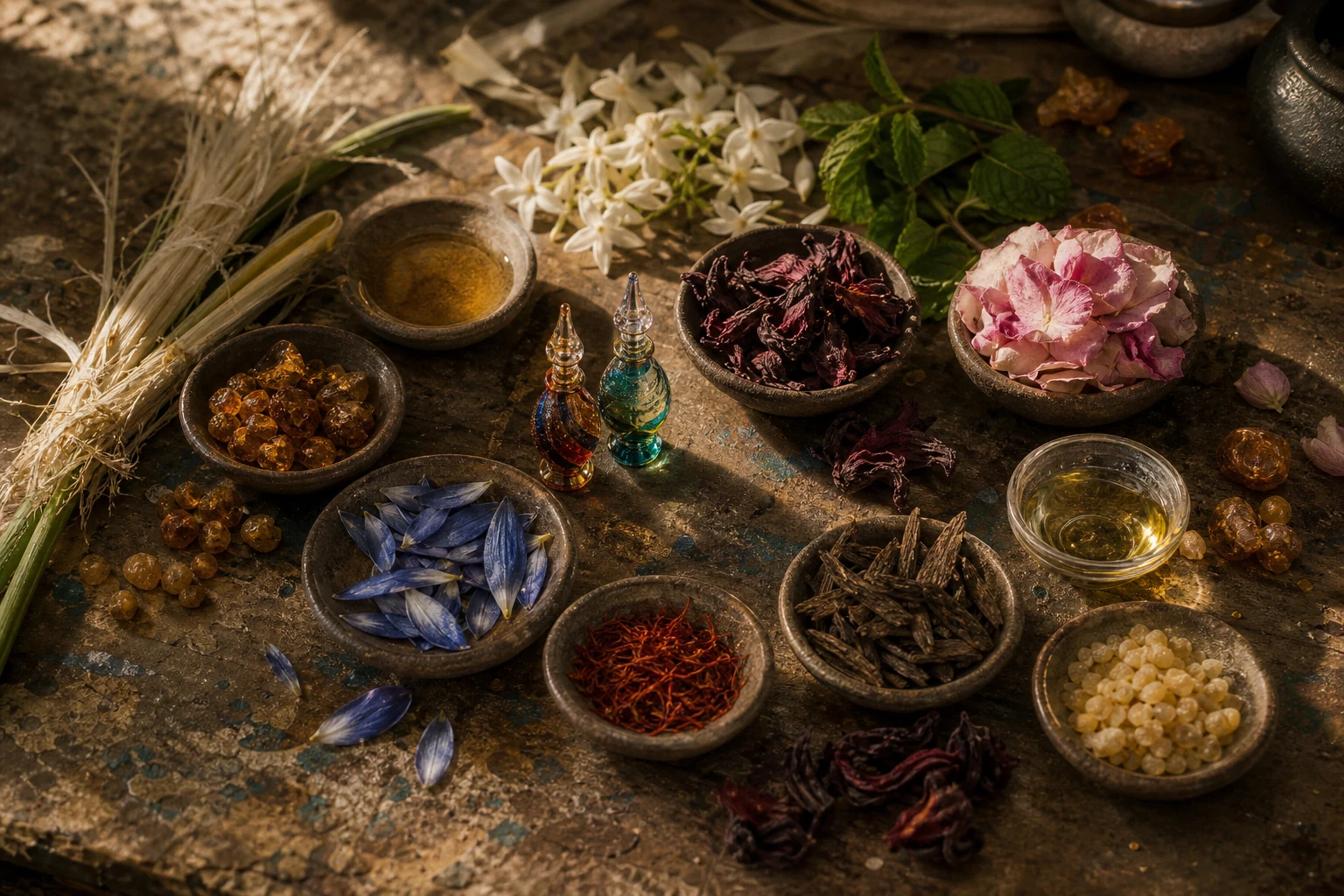
Ancient Egypt used oils, unguents, incense and scented fats for thousands of years. But the honest answer is narrower than most stories online. We rarely know that a named pharaoh wore one exact scent. What we have instead is real and specific: tomb objects, temple inscriptions, trade records and chemical analysis of what was actually inside the jars.
Here is the documented version, with legend kept separate from fact.
Tutankhamun really did have perfume jars
Howard Carter’s own excavation notes from the tomb of Tutankhamun list a perfume vase and a cosmetic jar among the objects. Conservation records describe alabaster vessels whose contents were resin mixed with fatty matter, the base of a solid Egyptian unguent.
So the strongest royal case is real: Tutankhamun was buried with scent vessels, and they held genuine aromatic, resinous, fat-based material. What we do not have is a full recipe. The famous claim that people could still smell the perfume when the tomb was opened after three thousand years is popular legend, not documented fact.
Hatshepsut and the myrrh of Punt
Hatshepsut’s expedition to the land of Punt is one of the best records of royal fragrance supply. The temple reliefs at Deir el-Bahari show her ships returning with fragrant myrrh, incense and whole incense trees carried back to Egypt.
This is solid evidence that the Egyptian court imported the raw materials of perfume on a grand scale. It is not evidence of a single personal scent. Even the vessel long thought to hold “Hatshepsut’s perfume” turned out, on analysis, to contain something closer to a skin balm than a wearable fragrance.
Kyphi, the best-documented Egyptian blend
If one ancient Egyptian scent is genuinely written down, it is kyphi. Temple inscriptions at Edfu and Philae record it as a compound of aromatics ground and combined with wine, honey, raisins, juniper, resins and myrrh, then burned as sacred incense at dusk.
Kyphi was mostly a ritual incense rather than a worn oil, but it tells us the true direction of Egyptian scent: warm resin, honeyed sweetness, dried fruit and spice, built on frankincense and myrrh.
What were the main materials?
The safest, best-supported answer for the Egyptian scent world is:
- Resins: myrrh and frankincense above all
- Spices and herbs: cassia, cinnamon, cardamom, mint, calamus
- Florals: blue lotus, rose, lily
- Oils and fats as the base: balanos, moringa, sesame, almond, castor and animal fats
Egyptian perfume was not an alcohol spray. It was oil and fat that held the scent close to the skin. That single fact is the real difference between ancient Egyptian perfume and the modern bottle.
Why it matters for Ankh
We do not claim to have recreated the exact perfume of any pharaoh. No one honestly can. What we do is work from the materials Egypt actually used, myrrh, frankincense, blue lotus, resin and warm oil, and make them by hand as oil, the way scent was worn here long before it was ever sprayed.
No fantasy. No invented pharaoh recipe. Just Egyptian oil perfume drawn from the documented world that came before it.